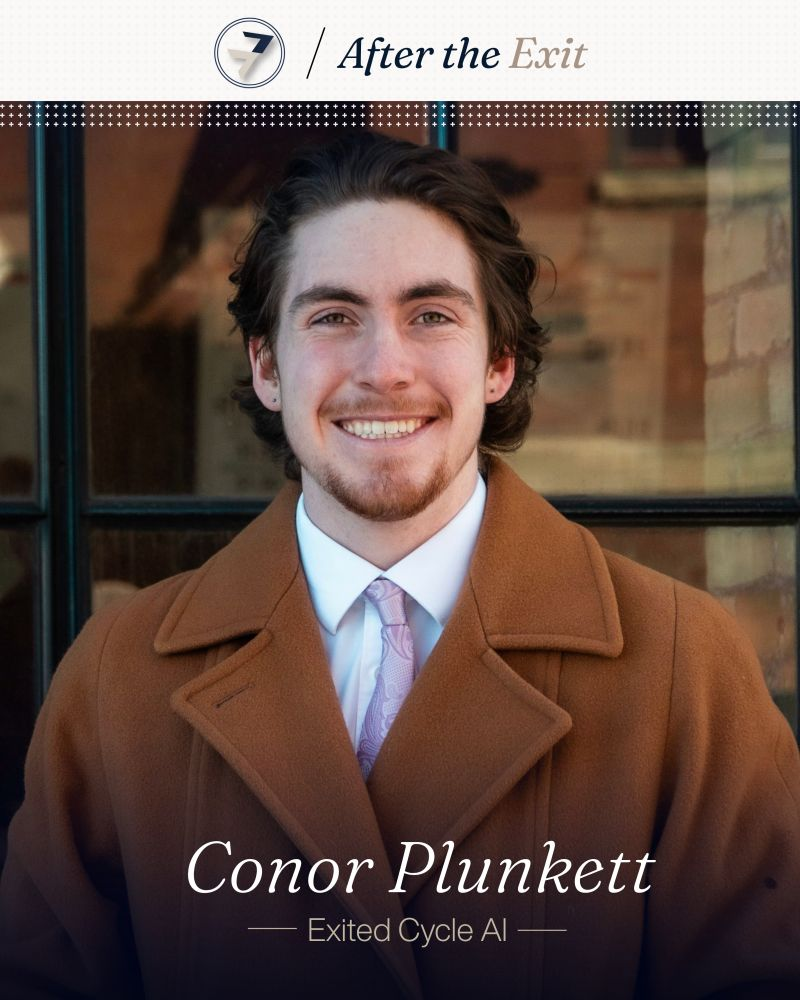
“Your first business doesn't have to be your identity.”
While an undergrad at Bentley University, Cooper co-founded Flagaholics, a company that sold flags for college dorm rooms.
It started when he saw a mutual friend, Adam Fuller, reading a marketing book in the library at midnight and thought, “Who reads in the library?” So Cooper asked him. That sparked a conversation about starting a marketing agency together, until they realized neither of them knew how to market anything.
So they decided to find something to sell first, just to learn how to market it, and then take that experience to local businesses.
A few days later, on a random Tuesday, Cooper got a text from Adam that just said: “flags?” Adam had spotted a huge American flag waving in the wind and thought dorm room flags could be their test, since far fewer people were selling them than T-shirts and hoodies. That text became Flagaholics.
At its peak, Flagaholics brought in $180,000 in a year and sold as many as 25,000 flags. But sales swung hard with the school calendar, and keeping up with sales tax rules was a nightmare.
So Cooper asked himself a harder question: was he still running Flagaholics because it was his best option, or because he'd gotten attached to being its founder?
He talked to founders on both sides of a sale, including one who had run a similar business for 15 years and grown it to several million in revenue. Cooper respected what that founder built. He just realized it wasn't the life he wanted. So they decided to sell.
His advice: your first business doesn't have to be your identity. Talk to founders who have already made the decision you're facing, get honest about why you actually want to sell, and remember that walking away isn't a failure. Sometimes a business exists to teach you what you're capable of, not to become your life's work.
Cooper, thank you for sharing your story and the real version of what selling feels like.